


Stretching Anatomy
Approval Codes
NCBTMB #70056729 CE Broker#20-403944
Available Course Formats
Test Information
- Number of Questions: 40
- Passing Score: 70%
- Test Only Option: Available for $79.00
Stretching Anatomy
Stretching Anatomy for Massage Therapists: Enhancing Flexibility, Recovery, and Client Care
Unlock the power of informed flexibility with our Stretching Anatomy course a continuing education course designed to elevate your massage practice and improve client outcomes. Whether you're helping clients recover from muscular tension, increase their range of motion, or improve posture and movement efficiency, this course provides the insight and tools you need.
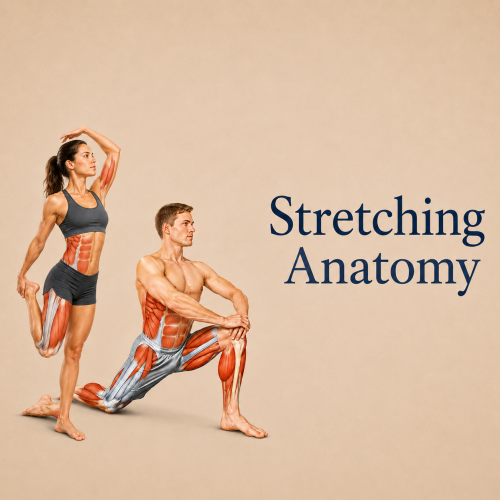
Based on the textbook Stretching Anatomy, this course goes far beyond traditional stretching instruction. You'll learn the how, why, and when of each stretch with visual clarity thanks to full-color anatomical illustrations that show the muscles engaged in every movement. You'll also gain critical insight into how variations in positioning affect stretch intensity, muscle emphasis, and overall safety, making it ideal for tailoring care to individual needs and conditions.
Course Highlights
- Detailed Stretch Breakdowns for the neck, shoulders, arms, trunk, hips, legs, and feet.
- Three Levels of Difficulty for every stretch ideal for beginners, advanced clients, and post-injury recovery.
- Customizable Stretching Programs to target problem areas or support athletic performance.
- Hands-On Application for integrating safe, effective stretching into your sessions or client self-care routines.
This course is ideal for massage therapists who want to deepen their anatomical knowledge, offer smarter home care recommendations, or confidently incorporate stretching into treatment plans. By the end of the course, you'll have a comprehensive, body-region-specific understanding of stretching mechanics, along with new skills to enhance both therapeutic touch and movement education.
Course Details
| CE Credits Awarded | 14 |
| Course Classification | Cognitive (course materials consist of concepts related to massage therapy but do not teach a specific hands-on modality) classified as "General" for CE Broker purposes. Only 5 CEs will apply toward a Florida license renewal. |
| Required Textbook | Stretching Anatomy by Nelson & Kokkonen, Third Edition |
| NCBTMB Provider | #280672-00 |
| Florida Approval | #MCE-326 |
| New York Approval | #0019 |
Enrollment Options
| Materials by Mail + Online Test | $129 USD plus shipping Textbook will be shipped to you; test taken online. |
| Test Only | $79 USD You provide your own textbook (new, used, or electronic). Nothing will be mailed to you. A study guide is available upon request by email. When you log in, all you will be able to access is the online test. |
Testing: You complete your test online and immediately upon passing, print your certificate.
CE Broker Note: You must provide your massage license number prior to taking the online exam if you would like us to report your completion to CE Broker on your behalf.
Approvals & State Acceptance
The Institute of Somatic Therapy is approved by the NCBTMB (Provider #280672-00) as a continuing education Approved Provider, and is also approved by Florida (#MCE-326) and New York (#0019). Our courses are also valid for AMTA, ABMP, and most individual states. Some states limit how many hours can be completed online or by home study. Please refer to our State Guidelines section for specific information about your state. Laws can and do change, and your state will hold you responsible for knowing the laws that apply to you.
About the Textbook
Stretching Anatomy by Nelson and Kokkonen arms you with the knowledge to increase range of motion, supplement training, enhance recovery, and maximize efficiency of movement. It provides a detailed understanding of how each stretch affects the body.
Like having an X-ray of each stretch, the book features full-color illustrations of muscles in action, along with explanations of how changes in position can alter muscle emphasis, difficulty, safety, and effectiveness. Each exercise includes detailed instructions on how to stretch, when to stretch, primary and secondary muscle emphasis, and which muscles are activated for support. Stretching programs provide three levels of difficulty including light stretching for warm-up or recovery from soreness or injury and summary movement tables show how to customize programs to focus on key problem areas.
Table of Contents
- Neck
- Shoulders, Upper Back, and Upper Chest
- Arms, Wrists, and Hands
- Lower Trunk
- Hip
- Knees and Thighs
- Calves and Feet
Related Courses
If you are interested in this course, other courses that may be of interest to you are: Facilitated PNF Stretching and Sports and Exercise Massage.
Frequently Asked Questions
Will this course teach me how to incorporate stretching techniques into my massage sessions?
Yes. This course provides step-by-step guidance on how to integrate effective stretching techniques into your massage practice. You'll learn when and how to apply specific stretches safely, how to adjust intensity based on client needs, and how to use stretching as part of warm-up, recovery, or injury care strategies.
Does the course cover how different stretch positions affect muscle engagement and outcomes?
Absolutely. One of the unique strengths of this course is its focus on position-based variations. Detailed anatomical illustrations show how shifting a limb or adjusting body posture can change the primary and secondary muscles involved in a stretch, helping you fine-tune your techniques for greater precision and results.
Are there specific stretching protocols for different client conditions or body regions?
Yes. The course includes structured stretching programs organized by body region neck, shoulders, hips, lower trunk, and more with scalable difficulty levels. You'll learn how to customize routines to target common problem areas, support rehabilitation, or help athletic clients optimize their flexibility and movement efficiency.
Do you report course completions to the NCBTMB, ABMP, AMTA, or other agencies?
None of these agencies have a method for us to report to them on your behalf. They prefer that you provide evidence of your CEs as detailed in their individual renewal processes. We report only to CE Broker for states that use that system, and only if you have provided your license number prior to completing the online exam.
To contact the Institute of Somatic Therapy about this or any other massage therapy CEU course, please use the Contact link above.